
About An Teallach Ale Brewing
The An Teallach Story so far
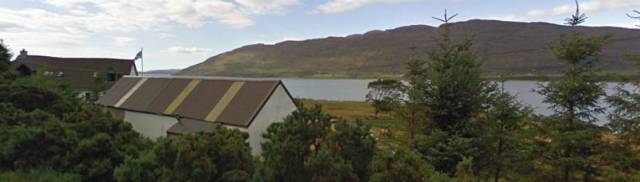
On the family croft
at Dundonnell in the North West Highlands of Scotland Husband and wife team
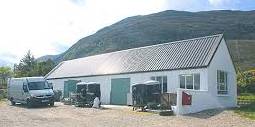
David and Wilma Orr started The An Teallach Ale Company from a small tin shed on the side of
the road in 2001.
Before getting their own 5-barrel plant operational during 2003, a beer was brewed for them at Atlas Brewery in Kinlochleven. The brewery started with a 5 BBL plant and now operates a 16 BBL brewing plant and packages in casks as well as bottles. The brewery supplies their fine ales to the whole of the Highlands and as far south as Edinburgh, Glasgow and the Scottish Borders;
We are talking classics such as the An Teallach Ale, translated from Gaelic as the anvil or forge and named after a mountain southwest of Dundonnell and overlooks Little Loch Broom. This is still one of the finest I have tasted, a smooth ale with subtle flavours of coffee and chocolate.
Another is Beinn Dearg, named after a mountain hidden from the regular tourist route by the Loch Maree mountains and Crofters’ Pale Ale, another favourite.
In the range is The Hector Ale, named after a sailing boat which, in 1773, transported 189 Scottish passengers from Loch Broom to the harbour at Brown’s Point in Pictou where they began the first Scottish settlement in Nova Scotia. It is a good name for this stout-like ale, made a stone’s throw away from where its namesake sailed. So why don’t you come down and try one? Maybe you’ll find your favourite too.
An Teallach ales offer a variety of big flavours, aiming to have something for every taste, hopefully then no-one will be left disappointed.
An Teallach mountain ( the forge ) dominates the skyline and itself has 10 distinct peaks greater than 3000 feet in height. It lies in an area often nicknamed the "great wilderness".
The mountain is mostly made of Torridonian sandstone. Like the peaks around Torridon (for which the rock is named), An Teallach has terraced sides riven with steep gullies and a sharp rocky summit crest at Sgùrr Fiona. The steepest section, known as Corrag Bhuidhe, rises above Loch Toll an Lochain. Corrag Bhuidhe's most spectacular feature is an overhanging pinnacle known as Lord Berkeley's Seat.
An Teallach is a complex mountain massif, with ten distinct summits over 3,000 feet (914.4 m). From 1891 to 1981, only the highest of these, Bidean a' Ghlas Thuill, had the status of a Munro – a separate mountain over 3,000 feet.
In 1981 the Scottish Mountaineering Club granted Munro status to Sgùrr Fiona, in recognition of its considerable topographic prominence (150 m) and distinct nature.
The complete list of Munros and Tops (subsidiary summits appearing on Munro's Tables) is now as follows:-
Bidean a' Ghlas Thuill 1062 m (3484 ft)
Glas Mheall Mòr 979 m (3212 ft)
Glas Mheall Liath 960 m (3150 ft)
Sgùrr Fiona 1060 m (3478 ft)
Corrag Bhuidhe 1040 m (3412 ft)
Lord Berkeley's Seat 1030 m (3379 ft)
Sgurr Creag an Eich 1017 m (3337 ft)
Stob Cadha Gobhlach 960 m (3150 ft)
Sàil Liath 954 m (3130 ft)
Corrag Bhuidhe Buttress 945 m (3100 ft) - deleted from Munro's Tables in 1997
Ascent routes The simplest route of ascent is probably that from Dundonnell, which follows a good path over rising ground to reach the northern summit, Bidein a' Ghlas Thuill, a distance of about 6 km (3.7 mi). From here the second summit, Sgurr Fiona, lies about 1 km (0.62 mi) to the southwest. An alternative northern route heads up from Corrie Hallie, which lies about 4 km (2.5 mi) south of Dundonnell. This route, some 5 km (3.1 mi) in length, climbs steeply up the headwall of the corrie of Glas Tholl to reach the main ridge just north of Bidein a' Ghlas Thuill. Both of the above routes, however, miss out the central section, for which An Teallach is best known. A route reaching the summits from the south starts from near Corrie Hallie. It then follows a track (later a path) southwest for about 5 km (3.1 mi). Then it breaks off to the north, climbing the southern end of the ridge via a subsidiary summit known as Sàil Liath. Heading northwest towards the Corrag Bhuidhe buttresses a choice must be made. One may either scramble over them directly (including the crossing of Lord Berkley's Seat), or take the bypass path on the southwest side. This path is eroded in some places and should not be regarded as an easy option. The winter traverse of the ridge is probably more demanding than that of Liathach or the Aonach Eagach, because of the comparative remoteness of the mountain. Some parties use the bothy at Shenavall as an overnight base.
Before getting their own 5-barrel plant operational during 2003, a beer was brewed for them at Atlas Brewery in Kinlochleven. The brewery started with a 5 BBL plant and now operates a 16 BBL brewing plant and packages in casks as well as bottles. The brewery supplies their fine ales to the whole of the Highlands and as far south as Edinburgh, Glasgow and the Scottish Borders;
We are talking classics such as the An Teallach Ale, translated from Gaelic as the anvil or forge and named after a mountain southwest of Dundonnell and overlooks Little Loch Broom. This is still one of the finest I have tasted, a smooth ale with subtle flavours of coffee and chocolate.
Another is Beinn Dearg, named after a mountain hidden from the regular tourist route by the Loch Maree mountains and Crofters’ Pale Ale, another favourite.
In the range is The Hector Ale, named after a sailing boat which, in 1773, transported 189 Scottish passengers from Loch Broom to the harbour at Brown’s Point in Pictou where they began the first Scottish settlement in Nova Scotia. It is a good name for this stout-like ale, made a stone’s throw away from where its namesake sailed. So why don’t you come down and try one? Maybe you’ll find your favourite too.
An Teallach ales offer a variety of big flavours, aiming to have something for every taste, hopefully then no-one will be left disappointed.
 |
 |
The An Teallach Mountain Range
An Teallach mountain ( the forge ) dominates the skyline and itself has 10 distinct peaks greater than 3000 feet in height. It lies in an area often nicknamed the "great wilderness".
The mountain is mostly made of Torridonian sandstone. Like the peaks around Torridon (for which the rock is named), An Teallach has terraced sides riven with steep gullies and a sharp rocky summit crest at Sgùrr Fiona. The steepest section, known as Corrag Bhuidhe, rises above Loch Toll an Lochain. Corrag Bhuidhe's most spectacular feature is an overhanging pinnacle known as Lord Berkeley's Seat.
An Teallach is a complex mountain massif, with ten distinct summits over 3,000 feet (914.4 m). From 1891 to 1981, only the highest of these, Bidean a' Ghlas Thuill, had the status of a Munro – a separate mountain over 3,000 feet.
In 1981 the Scottish Mountaineering Club granted Munro status to Sgùrr Fiona, in recognition of its considerable topographic prominence (150 m) and distinct nature.
The complete list of Munros and Tops (subsidiary summits appearing on Munro's Tables) is now as follows:-
Bidean a' Ghlas Thuill 1062 m (3484 ft)
Glas Mheall Mòr 979 m (3212 ft)
Glas Mheall Liath 960 m (3150 ft)
Sgùrr Fiona 1060 m (3478 ft)
Corrag Bhuidhe 1040 m (3412 ft)
Lord Berkeley's Seat 1030 m (3379 ft)
Sgurr Creag an Eich 1017 m (3337 ft)
Stob Cadha Gobhlach 960 m (3150 ft)
Sàil Liath 954 m (3130 ft)
Corrag Bhuidhe Buttress 945 m (3100 ft) - deleted from Munro's Tables in 1997
Ascent routes The simplest route of ascent is probably that from Dundonnell, which follows a good path over rising ground to reach the northern summit, Bidein a' Ghlas Thuill, a distance of about 6 km (3.7 mi). From here the second summit, Sgurr Fiona, lies about 1 km (0.62 mi) to the southwest. An alternative northern route heads up from Corrie Hallie, which lies about 4 km (2.5 mi) south of Dundonnell. This route, some 5 km (3.1 mi) in length, climbs steeply up the headwall of the corrie of Glas Tholl to reach the main ridge just north of Bidein a' Ghlas Thuill. Both of the above routes, however, miss out the central section, for which An Teallach is best known. A route reaching the summits from the south starts from near Corrie Hallie. It then follows a track (later a path) southwest for about 5 km (3.1 mi). Then it breaks off to the north, climbing the southern end of the ridge via a subsidiary summit known as Sàil Liath. Heading northwest towards the Corrag Bhuidhe buttresses a choice must be made. One may either scramble over them directly (including the crossing of Lord Berkley's Seat), or take the bypass path on the southwest side. This path is eroded in some places and should not be regarded as an easy option. The winter traverse of the ridge is probably more demanding than that of Liathach or the Aonach Eagach, because of the comparative remoteness of the mountain. Some parties use the bothy at Shenavall as an overnight base.
| Share | |||
 |  |
 |
 |